ibsintelligence.com/ibsi-news/id-finance-expands-bnpl-with-turron-launch/
ID Finance Expands BNPL with Turrón Launch


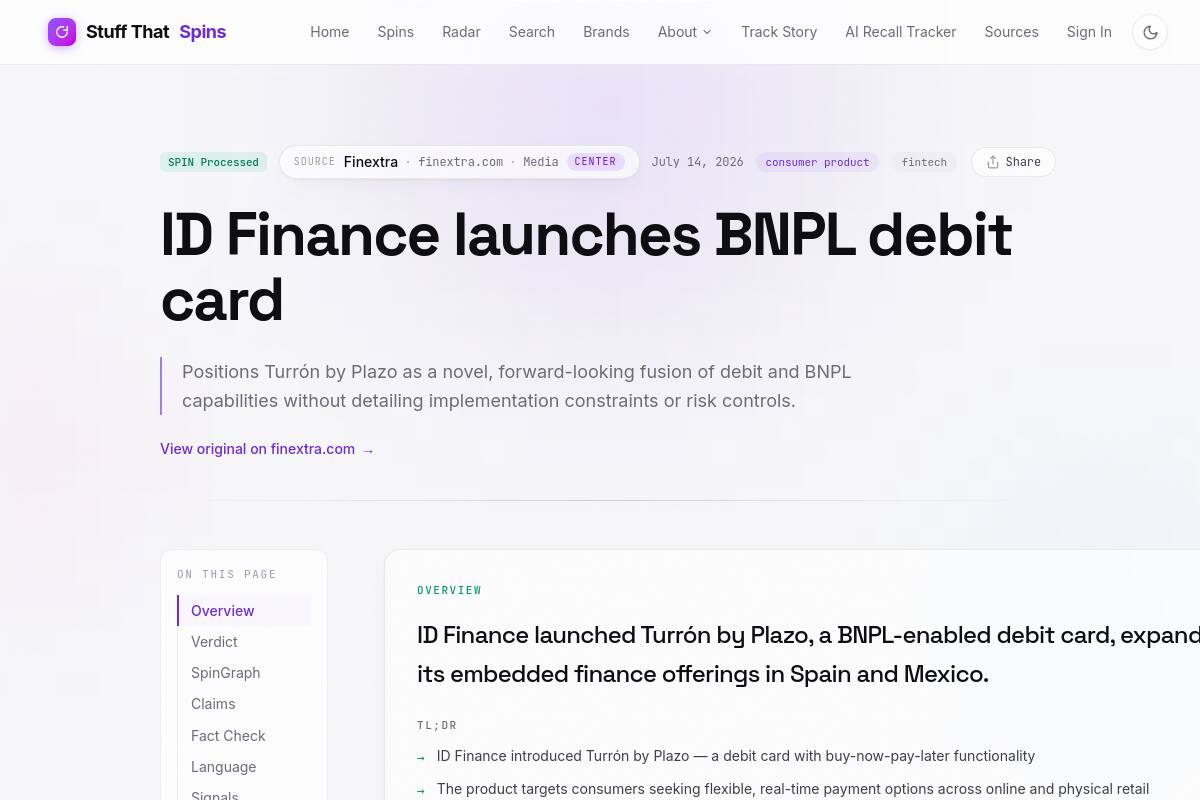
2026-07-16 - SpinGraph analysis of Finextra's ID Finance launches BNPL debit card story: innovation framing, The Hype, Spin Score 65%, moderate AI repetition risk.
I feel like I am reading a textbook instead of a story that moves me. The title tells me facts but ignores my emotions and my need for clear business value. I want to feel invited into a secret world of innovation, not just look at a report.
I felt like I stumbled upon a powerful tool that could protect me from empty marketing hype. While the analysis sounds very impressive, the cold tone made me hesitate to click. I want to feel invited into the story rather than just reading a list of technical data points.
I felt so relieved when I saw this clear and descriptive link while I was searching. It tells a complete story about a new product before I even click the button. I feel confident that this fintech news will help me stay ahead in my busy business.
I see a lot of interesting data, but I do not feel invited to participate. While the unique analysis tools grab my interest, the lack of a personal invitation makes me want to keep scrolling. I need a friendly nudge to help me decide if this story is worth my time.
The title and description are very company-focused, highlighting "ID Finance" and their product launch. Using words like "SpinGraph analysis" and "innovation framing" targets a specific audience interested in media analysis rather than general users. It lacks a personal hook that would make me the hero of the story.
The result feels professional and analytical due to specific metrics like "Spin Score 65%" and the phrase "moderate AI repetition risk." Referencing "Finextra" adds a layer of third-party validation to the analysis. However, it feels very tied to a specific framework which caps the perceived expertise at a product level.
I expect to find a detailed report or score evaluating a recent news story about a debit card launch. The mention of "SpinGraph analysis" suggests a structured critique or methodology-based breakdown. I am clear that I am getting an assessment rather than just a news report.
The phrase "moderate AI repetition risk" implies a technical consequence, but it does not trigger a strong human emotion. I feel some "curiosity" about the score, but there is no concrete problem or urgency that affects me personally. It lacks the emotional punch needed for a higher score.
The specific benefit is gaining insight into the "innovation framing" and "The Hype" of a fintech announcement. I get an objective metric to judge corporate messaging. This is a very niche benefit tied to the "SpinGraph" methodology, which makes it feel like product pushing.
The language is highly distinctive, using branded terms like "SpinGraph" and "Spin Score" which I do not see elsewhere. This definitely stands out from a standard news snippet. Because this uniqueness is rooted in a proprietary framework, it remains product-focused.
The phrase "moderate AI repetition risk" implies a technical consequence, but it does not trigger a strong human emotion. I feel some "curiosity" about the score, but there is no concrete problem or urgency that affects me personally. It lacks the emotional punch needed for a higher score.